This is the version of the confidence article we wish we'd had - written for adults who already know the self-help language and are tired of being told to "love themselves first" as if that's a single moment instead of a slow, ordinary practice. Dating with a disability is not a personality flaw to overcome before you're allowed to want partnership. The work isn't to become more lovable. The work is to stop accepting the quiet voice that says you aren't already.
The quiet voice that says you're too much (or not enough)
Internalized ableism is real. It's the voice that says you'd be a burden, that you should be grateful anyone is interested, that maintaining a "normal" relationship probably isn't in the cards for you. Most of the disabled and dating adults we talk to recognize that voice instantly - and most of them mistake it for honesty. It isn't. It's a story you absorbed from a culture that under-represents you, and it gets louder the longer you've been single.
The first move isn't to argue with the voice. It's to notice it has a voice at all. Once you can hear it as a separate track - not the truth, not your own thinking - you can start to question it. We've also seen the flip side: dismissing other disabled people as "settling" or being too much work. That's the same voice in different clothes, and it cuts you off from some of the most generous partners you'll ever meet.
Rebuilding self-worth after diagnosis or injury
If your disability is acquired - a crash, a diagnosis in your forties, a body that suddenly works differently - there's no shortcut around grief. You are not failing recovery by missing the version of yourself who didn't know. You're allowed to mourn that person and still be excited about the one taking shape now. Both can be true on the same Tuesday.
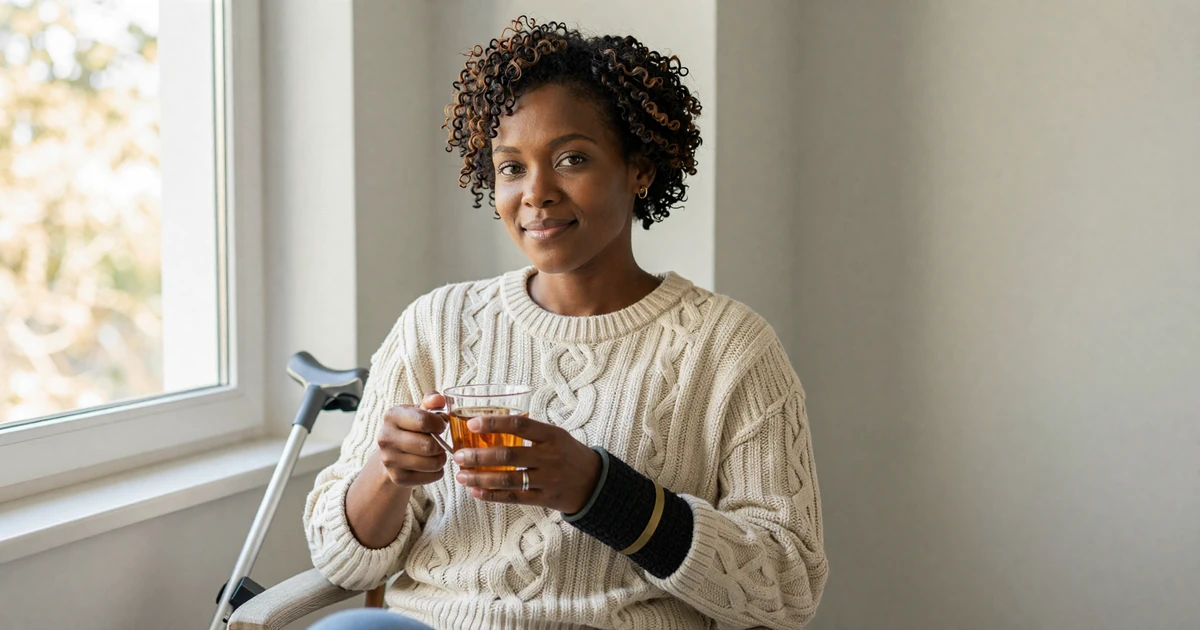
Sarah Kim's reminder is the one we keep returning to: there is no single right way to date with a disability. Decisions to conceal or reveal should be conscious and prepared. The most important principle is being your authentic self - you deserve to be loved for who you are, not the lighter, easier version you sometimes try to become for the first three dates. The lighter version is not sustainable, and the people who fall for it are falling for someone who isn't going to stay.
If you're early in this work, our disability disclosure guide walks through how to share your story without making it the headline. If grief is louder than confidence right now, our PTSD dating community and bipolar dating community are full of people who understand pacing.
Writing a profile from a place of confidence, not apology
A profile is not a medical disclosure. It's a small window into a real person. The strongest disabled and dating profiles we see follow four habits, borrowed from Includate's profile guidance and refined by what our members tell us actually works:
- Lead with personality, not diagnosis. What you do for fun is more interesting than what your body does.
- Mention access as needs, not apologies. "Step-free venues only" is a sentence, not a disclaimer.
- Use recent photos that show real life. Mobility aids, adaptive gear, hearing aids - visible, in their natural place.
- State what you're looking for. Vagueness invites the wrong people. Specificity invites the right ones.
Reframing rejection: it's data, not a verdict
Rejection on a dating site stings whether you're disabled or not. The added layer for many of us is that rejection feels like confirmation of a story we were already half-telling ourselves. It isn't. A no is information about fit, not a verdict on worth. Most matches don't go anywhere - that is true for everyone with a profile, on every platform, in every city.
One pattern worth naming: the friend-zone trap. The author behind Wheel:Life describes how, since using a wheelchair, men view her as a "strong, wise, survivor of a tragedy" they can talk to but don't want to "break." Her response is the right one - refuse the framing. You are not a fragile inspiration. You are a person with desires, contradictions, and a real body that wants to be wanted.
I think I am already broken - and I'm still here, still wanting, still funny, still picky about my coffee. The men who can't hold both things aren't the ones I'm trying to date. - Reframing the friend-zone, in plain language
When a match goes quiet, run the cheapest experiment first: assume nothing. Send one short, warm follow-up. If silence continues, close the tab. The people who fade were never going to be the ones who stayed for the part you can't hide.
Small daily practices that rebuild dating confidence
Confidence is a skill, not a mood. The list below is what our most-grounded members report doing - none of it is glamorous, and all of it compounds.
- Name the voice once a day. When the "you'd be a burden" thought shows up, label it ("there's the ableism tape") and keep walking. Naming weakens it.
- Write three lines you'd say to a disabled friend. Read them back as if they're for you. Most of us are kinder to others than to ourselves - borrow that kindness.
- Send one message a week with no agenda. A "thinking of you" to a friend, not a match. It rebuilds the muscle of being warm without performing.
- Curate your feeds. Unfollow accounts that make disability a tragedy or a brand. Follow disabled adults living ordinary, full lives. Representation is not optional.
- Set a "good enough" profile timer. 30 minutes, then publish. Endless editing is a stalling tactic dressed up as care.
- Track three small wins each Sunday. Sent a message. Said no to a draining chat. Wore the shirt you like. Tiny, cumulative, real.
What members tell us about dating with a disability
These two quotes are paraphrased from what members shared with us. We've kept the shape of their words because the shape matters.
Other apps stymied me whenever it came time to talk about my disease. I had given up - isolation is an easy cop-out that can eventually kill you. This place gave me back the gift of hope. The parts of me that felt unappreciated elsewhere just aren't obstacles here.
I became permanently disabled at 55 and stayed single for eight years. I almost didn't join. When I needed surgery, my partner flew across the country and drove me. Our abilities complement each other - he drives, my hands are steadier at the table. We are not each other's caretakers. We're each other's people.
If those resonated, our success stories page has more - and our real stories of disabled couples guide goes deeper into the long arcs.
Keep reading: disabled and dating, with care
Confidence isn't built in one article. The pages below are the ones our most-loved members come back to.